Cuplock system
Standards from 0.5 m to 3.0 m, ledgers from 0.915 m to 2.0 m, spigots and challi decking — the complete bay, in matched sizes.
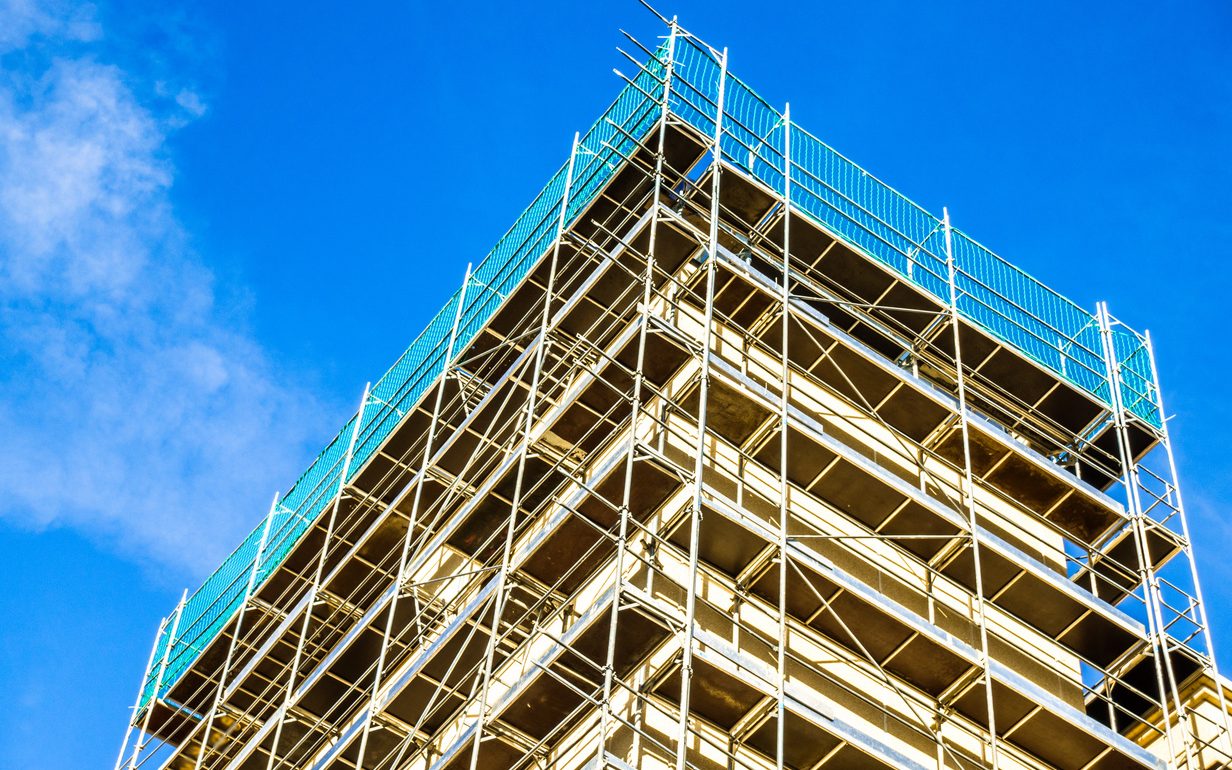
Take what the programme needs, for as long as it needs it. Hire keeps the capital in the project instead of in steel that sits idle between pours.
Why hire
Buying a full scaffold fleet only makes sense if it is working continuously. For a single tower, a one-off industrial shutdown or a peak that lasts two months, hire is simply the cheaper number — and it is someone else's problem to store, repaint and count the material when you are done with it.
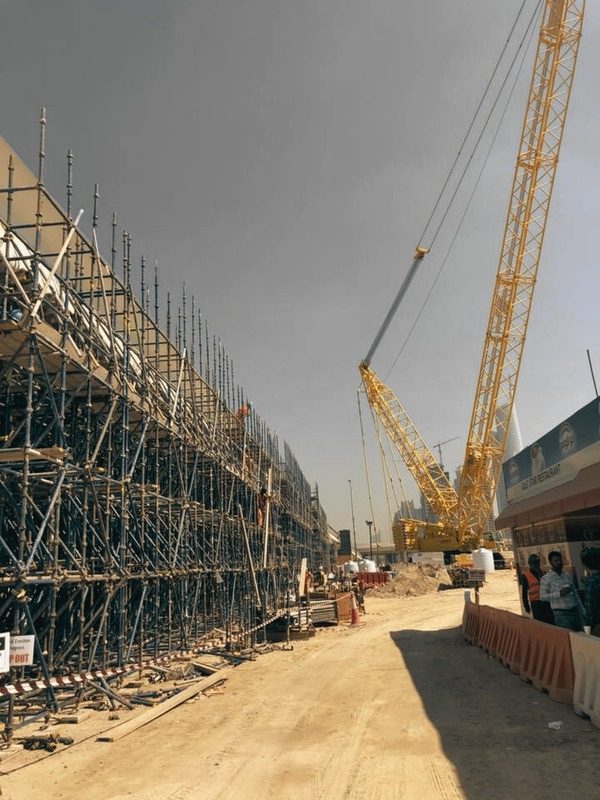
Available on hire
Effectively the whole catalogue. These are the items that move most often — everything else on the products page can be hired too.
Standards from 0.5 m to 3.0 m, ledgers from 0.915 m to 2.0 m, spigots and challi decking — the complete bay, in matched sizes.
Adjustable props 2×2 m to 3×3 m, base jacks and U jacks in 14, 18 and 24 inch, with beam, U, angle or flat heads.
Shuttering plate from 1×3 ft to 2×4 ft, shuttering channel and MS pipe for lining, walers and raking support.
Steel planks 210 mm to 300 mm and MS challi in 1.8 m and 2 m — a flat, non-slip working deck for the crew.
MS pipe in 10 ft and 20 ft with fixed and swivel couplers, for the parts of a scaffold that never match the drawing.
Loaded against a checked list at our yard and sent to your site address, with the return collection arranged the same way.
How hire works
Slab area, floor count and programme dates — or a bill of quantities if you have one.
We work out the piece counts and quote a monthly rate against them, plus transport.
Hire period, security deposit and the condition the material goes out in, in writing.
Counted onto the truck and counted off at site, so both sides agree what is on hire.
Run on by the month, add tonnage mid-job, or call us to collect when the pour is done.
Rates depend on the mix of items, the tonnage and how long you need it — a two-month tower and a two-year infrastructure job are not priced the same way, and quoting a single headline rate would be misleading. Hire runs on a monthly basis against a refundable security deposit, with shortages and damage assessed on return against the list both sides signed at dispatch. Ask for the current rate card with your take-off.
Send the dates and the slab area. You will get piece counts, a monthly rate and a transport figure — not a brochure.